7 Things Everyone Should Know About Farmed Fish

If you eat seafood, chances are it is from a fish farm. Fish farming is a popular way to supply the growing world demand. Farmed fish accounts for about half of all fish consumed in the United States. Is fish farming the solution to the Earth’s food problems? Are marine farms able to satisfy the seafood needs of three billion people all over the world?

Here are some details about aquaculture and the long-term impacts it has on people, fish, and other animals. Although some fish farms may use sustainable practices, this is not always true. This industry is often referred to as a leader in food production. You should be aware of these seven concerns about farmed fish.

1. Wild fish might not be as nutritious as those caught in a farm.

This is a paradox that frustrates those who eat fish to improve their health. The nutritional benefits of fish can vary depending on how the fish is fed. For example, omega-3 fatty acid. Fish that are wild get their omega-3’s through marine lipids (or oils). However, fish raised for their omega-3’s are often fed corn or soy and other vegetable oils, which contain very little to no omega-3.

This feed can cause fish to consume higher amounts of saturated fats, and a lower ratio of omega-6 to Omega-3. This is not as desirable as the opposite.

Are you looking for fish farming in India? Visit Fish Farming Companies in India for more details about fish farming.

2. Wild species are also affected by farmed fishing.

Some farmed fish can survive on corn and soy diets, but others must eat lots of fish. For every pound of bodyweight, tuna and salmon need to consume five pounds of fish. This means that fish like anchovies, herring, and other prey are being fished to the point of extinction in order to feed world’s fish farms.

Oceana says that they have caught all the large fish and are now going after their food. The non-profit Oceana blames aquaculture’s voracious appetite for the decline in whales, dolphins and sea lions.

3. Fish can feel pain or stress.

The latest research has shown that fish can feel pain and stress, contrary to what many anglers believe. Fish raised for their meat are often subject to stress, such as hyper-confinement or exhausting harvesting methods. Because fish can experience pain and stress, improved welfare practices for farmed fish have been required.

Are you looking for organic fish farming? Visit Organic Fish Farming in India for more details about fish.

4. Diseases can be spread from fish raised in farms to wild populations.

Fish that are conventionally farmed are often packed as tightly in their pen or net as they are in their purses. These conditions can lead to parasites and diseases that often spread from the farm to wild fish populations. Sea lice infestations can cause mass killings of young salmon off Canada’s Pacific coast. This increases their chances of dying by 73%.

The damage doesn’t stop there. Eagles and bears, orcas and other predators all depend on salmon to survive. These species also suffer from a decline in wild salmon numbers.

5. Local ecosystems can also be affected by fish farms.

To control disease and parasite spread, antibiotics and other chemicals could be used on fish farms. One study showed that sea lice drugs kill a wide range of non-target marine insects and can travel up to half a kilometer before reaching the ocean. They also persist in the water for hours.

Looking for fish farming technology? Visit Fish Farming Technology in India

6. Farmed fish are trying to escape their unpleasant conditions, and who can blame them?

Each year, more than two million runaway salmon escape to the wild in the North Atlantic region. This means that approximately 20% of the supposedly wild salmon found in the North Atlantic region are farmed. However, this data was published in 1999. The wild population is affected by escapees who cross breed with wild fish to compromise the gene pool. For example, embryonic hybrid salmon are less viable than wild salmon.

If you want to know how much cost of fish farming? Just visit Fish Farming in India Project Cost they give you exact information about how fish farming works in India.

7. The Jevons Paradox is available.

Contrary to popular belief, this theory states that production methods become more efficient and the demand for resources increases. As aquaculture improves fish production efficiency, fish prices will rise.

This theory suggests that fish farms could actually increase fishing, which could be harmful to wild populations. The net result is that fish farming could increase the pressure on wild populations around the globe, which are already under severe threat.

What now?

It is a complicated story about the sustainability of fish farms. Fish farms are still a controversial topic due to higher rates of disease and chemical use waste. These examples of fish farming harms are supported by evidence but they do not apply to every fish farm. Some farmed fish can be more sustainably and healthier than their wild counterparts.

To know more visit Fish Farming Investment and Profit in India.

http://www.asagriaqua.com

8 Advantages of Vertical Farming

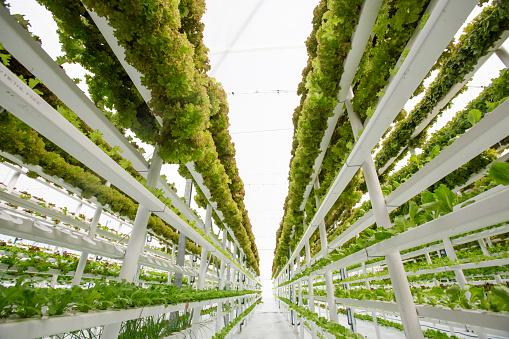
Vertical farming is the practice of producing food on surface that is vertically inclined. Unlike farming vegetables and other foods on one level, like during a greenhouse or field, this method produces foods in vertically stacked layers commonly integrated into other structures sort of a skyscraper, shipping container or repurposed warehouse. Using Controlled Environment Agriculture (CEA) technology, Vertical Farming in Dubai uses indoor farming techniques. The artificial control of temperature, light, humidity, and gases makes producing foods and medicine indoor possible.

Reliable year-round crop production

The biggest Vertical Farming in UK benefit is that the fact it’s not dependent on the weather – meaning you’ll achieve a uniform year-round crop production without fear about the impact of adverse climatic conditions can be on both quality and profiling of production and yield.

Farming in a protected, well-monitored, and managed environment brings peace and assurancee of mind for growers provides repeatable programmable production. By eliminating the consequences of Mother Nature, there’s no such thing as a ‘seasonal crop’ and growers won’t suffer from losses as they struggle to push the production windows of ‘seasonal cropping’. They can also successfully reduce harvest times as well as improve volume without compromising on flavour or quality, which tends to remains 100% consistent.

Unaffected by adverse climatic conditions

Growing during a fully enclosed and climate-controlled environment completely eradicates the necessity to believe – or worry about – the weather. Whereas crops during a field are often ruined by excessive rain, wind and drought ; Vertical Farming Companies in UAE provides 100% harvest certainty.

Better use of space

Traditional farms need fertile arable land. But vertical farms are often designed and inbuilt any climate or location – regardless of weather or temperature extremes. And since their stacking grow systems allow them to expand upwards, it’s also possible to realize higher productivity on a small land area. Counting on which crop is grown; one acre of vertical farm could consistently grow the like between 10 or 20 soil-based acres.

Environmentally friendly

Indoor farming are often good for the environment because it massively reduces the amount of fossil fuels needed for farming equipment which isn’t required to sow, fertilize, weed or harvest crops. Vertical farming also helps to enhance biodiversity because it doesn’t cause land surface disturbance, which helps the natural animal population which lives in and around farms to thrive.

Minimise water usage

One of the main Vertical Turmeric Farming in Dubai benefits is that the Hydroponic growing process only uses about 10% of the quantity of water, and as a result the nutrients and fertilisers, compared to traditional methods. Because the water is clean after usage, it can also allow it to be recycled and reused, by reducing costs and minimising waste.

No chemicals or pesticides

Growing food during a vertical farm, when managed correctly offers the chance to completely eliminate the need for pesticides – as pests cannot enter the controlled environment to cause crop damage and fungal diseases struggle to realize a foot hold as humidity levels are managed. the top result’s a product which is best , healthier, safer and featuring dry leaves which are clean and prepared to eat.

Reduce transport costs

When it involves food production, the last-mile delivery is usually the most expensive part of the supply chain. It’s not common for crops to be shipped across continents and oceans. Growing food closer to where the buyer lives is a massive Vertical Farming Investment UK benefit because it can massively reduce transportation costs, CO2 emissions and reduce the necessity for refrigerated storage

Low labour costs

Fully automated indoor growing systems don’t need huge amounts of manual labour to realize successful year-round production. People who have low-level skills are still required to sort and pack harvests, but labour overheads will remain low – even if production is scaled upwards.

The Growth Of Vertical Farming All Over The World

With more than 7,800 tall structures, the city of Hong Kong takes off over all others. More than 300 of its structures outperform 490 feet, with more individuals living more than 15 stories over the ground level than elsewhere on the planet. Having a horizon in the mists assists the thickly populated city with flourishing where space is limited. Horticulture has observed this development procedure, as vertical Farming Investment UK makes amazing yields. 

Vertical Farming is the interaction of food being created in vertically stacked layers, rather than on a solitary level, for example, in a field or nursery. The layers are generally incorporated into metropolitan constructions like high rises, steel trailers and repurposed distribution centers. 

Utilizing Controlled Environment Agriculture (CEA) innovation, the fake control of temperature, light, stickiness and gases makes it conceivable to create a huge swath of yields on a mechanical scale — with no open air openness. 

The Sky’s the Limit 

By 2050, around 80% of the total populace will live in metropolitan regions. With agrarian space in these zones scant or totally non-existent, how would we convey produce? 

It is assessed that one section of land of Vertical Farming In Dubai offers the same creation of at any rate four to six sections of land utilizing traditional open air techniques. As the plant’s development isn’t subject to daylight or influenced by meteorological conditions, creation can proceed at a similar rate throughout the entire year. As far as assets, the plants need however much 70% less water than customary homesteads. 

Natural harvests are a tremendous market, with request frequently overwhelming stock. As vertically cultivated harvests are delivered in an all around controlled region, there is undeniably less requirement for compound pesticides. It is additionally accepted that Vertical Turmeric Farming in Dubai could carry new create nearer to metropolitan populaces, decreasing the danger of supplements reducing during transport. 

No More Soil 

Tank-farming is a dominating developing technique by vertical Farming Companies In uae

the interaction includes developing plants in supplement arrangements that are basically liberated from soil, as roots are lowered into the arrangement and the plants are routinely checked to keep up the right degrees of compound piece. 

In case we’re actually to satisfy advanced plans of colonizing Mars, we will have to develop our own food. Anyway, where in the world has the conditions to try out this strategy? 

It may not have similar characteristics as the Red Planet, yet Antarctica’s constant winters make it difficult to develop produce outside, and products of the soil are sent significant distances from abroad only a couple times each year. 

In a bit nearer to extraterrestrial Farming, a semi-computerized tank-farming office develops plants without soil, utilizing mineral supplement arrangements in a water dissolvable. Researchers on Germany’s Neumayer Station III develop produce in a 20-foot-long steel trailer, developing greens in a region where such produce is normally restricted. This is only one illustration of how vertical Farming procedures can be utilized in territories influenced by brutal climate conditions. 

Detecting Growth 

To hit significant degrees of creation, development conditions in vertical homesteads should be ceaselessly upgraded. Sensors and information should be utilized to viably follow factors, for example, environment, supplement structure and light levels. 

Environment is described by a mix of air temperature, stickiness and carbon dioxide (CO2) levels. The impacts of these variables are huge. The distinction among plant and air temperature, for instance, can reveal to us whether the leaves’ stomata are open. In the event that they’re shut, the plant can’t ingest CO2 and convert it into biomass. We can likewise gauge the light level and range as seen by the plants and the pH of water system water for ideal development. 

Utilizing keen sensors that can screen these factors will guarantee that Vertical Farming In UK homesteads produce yields that incredibly surpass those of regular ranches, which are affected by wild conditions. 

With a horizon loaded with present day, shining developments, Hong Kong capitalizes on its space to convey flourishing. While vertical Farming still has far to go before it is economically reasonable, it is sure that food makers can gain from the methods it applies to help convey produce our rising populaces.

10 Major Benefits Of Polyhouse Farming

The world has been agronomically overwhelmed since for eternity. The subtropical climatic conditions are generally appropriate for agribusiness and have been for quite a while. Nonetheless, as of late the proficiency of produce or the turnout has been lower than the standard and tremendous misfortunes have been confronted. 

To decrease misfortunes and accomplish a higher produce in a similar sum or significantly lesser measure of speculation nursery cultivating has been on the ascent. The term nursery is essentially instituted for the gases that are answerable for an Earth-wide temperature boost. They trap the warmth and don’t permit it to get away. 

What is named terrible for the climate can be utilized for our advantages in a controlled encompassing. A polyhouse by vertical Farming Companies In uae  is a construction that is normally covered with glass, polyethylene or wood and the appropriate conditions are looked after inside. The temperature inside is higher than that of the outside because of the presence of ozone depleting substances. 

A polyhouse is a kind of nursery which is covered with polyethylene. This is the most usually utilized kind of nursery cultivating in India because of its modest development cost. This is the most practical when contrasted with glass or wood, nonetheless, is the most un-solid. Here is a finished manual for polyhouse development in India. 

Polyhouse Vertical Farming In UK  is very helpful for the farmers especially those who choose organic farming, so here are 10 of the benefits of a polyhouse:

There are different points of interest for a polyhouse of development of Vertical Turmeric Farming in Dubai over ordinary cultivating. That is the reason we are seeing an uprising in polyhouse development. There are over 1,000,000 distinctive polyhouse plants in India and there are more to come in the coming long time to satisfy the market need. The temperature of the climate can be controlled by the necessities and the yield acquired could be better. 

High dampness can likewise be changed in like manner. In an open field, the yields are more inclined to assaults by vermin and bugs which makes the ranchers shower bug sprays and pesticides that are unsafe for us. Polyhouse vertical Farming Investment UK development decreases or rather eliminates the need of any pesticides and synthetic compounds in this manner keeping the harvests better for utilization and not lessening its dietary benefits. Your plants are grown under controlled temperature therefore there is less likelihood of crop loss or damage.In an open field, attack by creatures and winged animals likewise bring about right around 33% of the harvest being lost and this can be maintained a strategic distance from in a polyhouse. 

The agrarian land in India has been diminishing and polyhouse cultivating is the most ideal approach to beat the circumstance. This is the reason there are different Vertical Farming In Dubai polyhouse cultivation instructional courses led in different pieces of the country in different organizations that will advance the development of polyhouse development.

We can get more produce and more yields by cultivating in a controlled way and the benefits and the nature of the produce is consistently higher for this situation.

You can grow crops during the year and will not have to wait for any particular season.There are less pests and insects in a polyhouse.Fertilizer application is easier and is controlled automatically with the help of drip irrigation.

Exterior climate will not have any impact on the growth of crops.

Quality of produce is obviously higher in polyhouse.

Good drainage and aeration Propagation of Ornamental Crops can also be done fluently in a Hydroponic Farming in India.

Poly House gives the right environmental amenities to your plants in any season.

It also increases yield for about 5 to 10 times with Less cropping period

Vertical Farming? however Vertical Farming Works and Advantages of Vertical Farming

vertical farming companies in india is your Practice of creating meals on downhill inclined surfaces. Instead of farming veggies and other foods on a single level, such as in a field or a greenhouse, this method produces foods in vertically stacked layers commonly integrated AS Agri & Aqua into other structures such as a skyscraper, transport container or repurposed warehouse.

Image result for vertical farming

Using Controlled Environment Agriculture (CEA) engineering, this modern notion uses indoor farming methods. The artificial control of temperature, humidity, light, and gases which makes generating foods and medication indoor possible. In many ways, vertical farming is similar to greenhouses where metal reflectors and artificial lighting fortify natural sunlight. The main objective of vertical farming is optimizing crops output in a restricted space.

There are four critical Areas in understanding how perpendicular farming functions:

1. Physical layout

2. Lighting

3. Growing moderate

4. Sustainability features.

First, the primary goal OfVertical farming in India is producing more foods per square meter. To accomplish this goal, plants are cultivated in stacked layers at a tower life construction. Secondly, a perfect mixture of natural and artificial lights is utilized to keep the great light level in the room. vertical farming in mumbai Technologies such as rotating beds are used to increase lighting efficiency.

Thirdly, instead of dirt, Aeroponic, aquaponic or hydroponic growing mediums are used. Peat moss or coconut husks and comparable non-soil mediums are extremely typical in farming. Last, the vertical farming system uses various sustainability characteristics to offset the energy cost of farming. In reality, vertical farming utilizes 95 percent less water.

Vertical farming has a lot Of guarantee and sounds just like the farm of the future. However, there are a few stumbling blocks to think about before hurrying full-speed ahead into farming.

Asagriaqua are also in aquaculture in India.

Advantages of farming

It offers a strategy to Manage Future food demands

It allows plants to grow Year-round

It uses significantly less water

Weather doesn’t affect the Plants

More organic crops can be Grown

Chemicals and disorder

Advantages of Vertical Farming

Having greater output signal from A small cultivation area isn’t the only benefit of farming. Following are a Few of the major benefits of perpendicular farming:

Planning for Future: By 2050, approximately 80% of the world population is expected to reside in urban areas, and the growing population will lead to an increased demand for food. The efficient utilization of vertical farming may perhaps play a substantial role in preparing for such a challenge.

Increased And Year-Round Crop Production: vertical farming companies allows us to create more plants from the same square footage of developing region. In fact, 1 acre of an indoor area offers equal production to at least 4-6 acres of outside capacity. According to an independent estimate, a 30-story building having a basal area of 5 acres can potentially create an equivalent of 2,400 acres of traditional horizontal farming. Furthermore, year-round crop production is possible in a controlled indoor environment that’s completely controlled by vertical farming technologies.

Cultivation: Vertical farming allows us to produce crops with 70-95 percent Less water than needed for ordinary cultivation. For more service Hydroponic Farming in India.

Types of Vertical farming

Prime agricultural land can be scarce and Expensive. With global population increase, the demand for both more meals and more land to grow up food is increasing. AS Agri & Aqua some entrepreneurs and farmers are beginning to look up, not out, for space to grow more food vertical farming companies in india.

One solution to our need for more space Might be discovered in the deserted warehouses in our cities, new buildings constructed on environmentally damaged lands, and even in used shipping containers from ocean transports. This statement, known as vertical farming, link developing crops in controlled indoor environments, together with precise light, nutrients, and temperatures. In Vertical farming in India, increasing plants are piled in layers that may reach several stories tall.

Image result for vertical farming

Here are Kinds of Vertical Farms

vertical farming in mumbai are located in different shapes and Sizes, from easy two-level or wall-mounted systems to big warehouses many stories tall. However, all perpendicular farms use among three soil-free methods for give nourishment to crops —hydroponic farming in india, aeroponic, or aquaponic. The following information describes these three growing systems:

The overriding increasing system utilized in The plant roots are swamped in the nutrient solution, which is frequently circulated and monitored to make certain the ideal chemical makeup is well-kept.

Hydroponic Farming in India or growing plants in water or sand, rather than soil, is done using mineral nutrient solutions in a water solvent.

Aeroponics

Administration (NASA) is trusted for creating this revolutionary indoor climbing technique. Interested in finding effective ways to grow plants in space and coined the expression”aeroponics,” defined as”growing plants fish farming in india in an air/mist surroundings free of dirt and very little water.”

The vertical farming globe, but they’re attracting significant interest. An aeroponic system is unquestionably the most efficient plant-growing method for vertical farms, vertical hydroponic farming using up to 90 percent less water than the very effective hydroponic systems. Plants grown in these aeroponic systems also have been shown to uptake more vitamins and minerals, making the plants fitter and potentially more healthy.

These are freshwater aquaculture in India and brackish water aquaculture. Freshwater aquaculture involves the breeding of freshwater

Aquaponics

An aquaponics fish farming system takes the hydroponic System one step further, combining fish and plants at precisely the same ecosystem. Fish are grown in indoor ponds, making nutrient-rich waste that’s used as a feed source for the plants in the shuttle. The plants, in turn, filter and purify the wastewater, which can be recycled to the fish ponds.

Building-based vertical farms are usually housed in abandoned buildings in cities, such as Chicago’s “The Plant” vertical farm which was constructed in an old pork-packing plant. New building construction is also utilized in vertical farms, like the new multistory vertical farm being attached to an existing parking lot structure in downtown Jackson Hole, Wyoming.

Shipping-container vertical farms are an increasingly popular alternative. These vertical farms utilize 40-foot shipping containers, normally in support carrying goods fish agriculture in India around the globe. Brick farms that are vertical, complete with LED lights, drip-irrigation plants. These self-contained units have computer-controlled growth management Systems that enable users to track all systems remotely from a smart phone or computer.

About Vertical Farming Technology and How Does it Work

Vertical Farms are modular and can be adjusted to fit any building. Vertical Farms can also feed more people then regular farming can because they grow 75 times more food per square foot then a traditional farm. Vertical Farms also use no pesticides and no fungicides so the food is healthier and safer. Vertical Farms also reduce water consumption because AS Agri & Aqua farms use 90 percent less water than outdoor farms, so having a wet or dry season doesn’t matter. Asagriaqua farming can also control plant fertilizing nutrients so the food that is grown is highly nutritious. Grow a large volume of food in a relatively small space and use less water. 6,500 square meters = 900,000-kilo harvest. Vertical Farming methods could help preserve lands and rain forests and also give time for other lands to recover and replenish topsoil and also help reduce carbon consumption. Green Houses.

feature

Vertical farming in India is the activity of producing food in vertically stacked layers, such as in a skyscraper, and also used warehouse, or shipping container. The modern ideas of vertical farming use Asagriaqua farming techniques and controlled-environment agriculture (CEA) technology, where all environmental factors can be controlled.

Ski town turns car park into Vertical Farm for Local Jobs/Food – Vertical Harvest Jackson produces 100,000 pounds of vegetables a year on a plot 30 feet by 150 feet long; their 1/10th of an acre site grows an annual amount of produce equivalent to 10 acres of traditional farming.

Biofortification is the thought of breeding crops to addition their nutritional value. Biofortification disagree from ordinary fortification because it focusing on making plant foods more nutritious as the plants are growing, instead than having nutrients added to the foods when they are being processed.

How does Asagriaqua farming work?

There are various key factors that find out the viability of a vertical farm.

1. Physical layout

The objective of Asagriaqua farming is to maximise volume. This is achieved by increasing the output efficiency per square meter, which is where the vertical tower structure comes from.

2. Lighting

Optimising light for crop growth in vertical Farming normally involves a mixture of grow lights and natural light. Special technologies like rotating beds increase the skillfulness of the light sources and can fulfil different crop requirements.

3. Growing medium

There are three different models for the Asagriaqua agriculture system and aquaculture in India.

A. Hydroponics

Hydroponic Farming in India, crops grow in the nutrient-rich water basin and water is recirculated, creating better efficiency and lower water consumption. Scalable in sizing and cost, hydroponic farming is extremely adaptable to its farmers’ production goals and needs. It consider methods like Drip Irrigation, Deep Water Culture, Ebb and Flow, Nutrient Film Technique, and the Wick System for hydroponic farming.

B. Aeroponics

Aeroponic farming involves rarely spraying crops with a nutrient-based mist, using a periodical timer (no soil, sunlight, or water). Aeroponics delivers nutrients immediately to the plant roots to conserve water and reduce intensive labour. Scalability is some other solid benefit with this method, and crops are easily harvested without soil.

C. Aquaponics

A closed-loop food production system, aquaponics is the practice of cultivating both fish and plants. The fish give nutrients and healthful bacteria to the plants, which in turn filter the water for the fish. Aquaponic farming creates a extremely productive and balanced ecosystem with many benefits, including its water-conservative approach.

About AS agri & aqua- The Vertical Farming Company in India

AS agri and aqua LLP is the group of seasoned and experienced technocrats from different verticals came together to see through their common goal of agriculture and aquaculture in India, forming a promising company, which is leading in hi-tech agriculture and aquaculture.

There are some topic to learn:

Vertical farming:

Vertical farming in India is the Next Generation Urban farming project lead by A S AGRI AND AQUA which includes the mass production of organic turmeric in side polyhouse.

Vertical farming in poly house ensures the high yield with lesser resources saving 80% of water, hugely on labors and with excellent quality. Playhouse ensures the farming is protected from nature uncertainty and disease without requiring harmful chemicals.

100 Times more yield à Less Water Consumption
Minimal Man Power à100% Natural Product
Vertical Farming.

Turmeric production:

The yield of turmeric farming by this modern technology is much higher than the traditional method. In 1 acre under polyhouse, we can plant more than 650000 turmeric seeds or plant.in 8 to 9 month, we get almost 1.2 kilo to 2-kilo weight of matured turmeric crop. Even if we consider 1.5 kilos as average weight, and multiply this by 650000 seeds/plant, we get 8000 quintals to 10,000 quintals production of turmeric. And many more if you want to know more about ….. .over all we get RS 2cr income and even if we deduct RS 1cr our expense, we can get 50% of profit share in partnership. Hence this turmeric production by modern technology is a good opportunity for farmers to earn handsome income.

AS agri and aqua LLP deals in revolutionary technology in vertical farming, aquaculture, Bio-CNG, health care & food supplements, contract farming, turmeric trading and many more. 


It is the most reliable and trusted company in this line of work. Company involved into the production and trading and export of the various types of products. Here’s how the company is going to change the way of traditional Agri / Aqua farming done in the country.

AS Agri & Aqua is one of the leading Hydroponic Farming in India that also provides the best range of Heart & Healthcare, Vertical Farming, Aquaculture, Fish Farming in India.

ALL YOU NEED TO KNOW ABOUT AQUAPONICS

“Vertical farming” generally refers to growing plants in layers, whether in a multi-storey building, a warehouse or a shipping container. Vertical farming in India is growing at a steady pace with the help of effective training, subsidized rates & government programs.

Aquaponic growing may be a closed system that mixes aquacultural techniques beside cultivation. Simply put, the waste created by the fish provides the plants with nutrients. The plants than ‘clean’ the water and it’s returned to the fish tank.

Drip feed, flood and drain, NFT and DWC techniques may be used.

The mutualism of the plants and fish will depend upon a closely managed system. The useful bacterium that converts the fish waste into a usable kind for the plants depends upon (ammonia to radical to nitrate) needs a rigorously balanced pH (6.8–7.2). If left alone the pH can drop and become too acidic inflicting a danger to the fish.

HydroGarden provides the Fish-Plant clan and Production Unit. It’s supported flood and drain techniques to pull water from the fish tank into the plant bed, and drain away propulsion essential oxygen to the plant roots. Fish appropriate for these aquaponics systems embrace Tilapia, Trout, Carp, and Perch. You’ll grow a good kind of leaflike vegetables and herbs to eat as well as lettuces, pak choi, basil, mint, watercress, and Swiss chard.

How to Build a Vertical Aquaponic?

You can flip a little yard, a corner during an exceedingly in a very} community garden or an unused area in your home into a thriving vertical farm for vegetables and fish. A household-sized vertical aquaponic system will work into a 3ft by 5ft (1m x 2m) area and feed a family year-around. Sean Brady, the aquaponics comes organizer at the middle for sustainable Aquaponics and Nourish the earth in Loveland, Colo., showed the U.S.A. the way to build a system from scrap he found around the greenhouse.

MORE FOOD, LESS WATER

A vertical aquaponic system grows vegetables without soil in columns higher than a fish tank. It is a water-efficient and space-saving way to garden and lift fish. By growing vertically, you can manufacture concerning double the quantity of plants as you can with a hydroponic system of equivalent space. One five-foot tower can manufacture quite two hundred heads of lettuce per annum. And it uses a small fraction of the water required to grow crops in soil.

MUTUAL BENEFITS

The aquaponic system puts fish waste to figure as plant food for crops. A little pump attracts nutrient-rich water from the fish tank to the first-rate of the vertical columns. The water trickles down through the roots of the plants, gathering oxygen from the air because it falls back into the tank. The system is generally capsulated, with very little to no waste and no want for plant food or pesticides. And, if you are doing it well, you won’t clean the fish tank abundant.

You would replace lost water as required, power the pump and feed the fish. It’d not be too exhausting to power one amongst these pumps with a little solar panel or another renewable energy.

PARTS OF AQUAPONICS

Aquaculture in India has been developed into two main elements similar to Aquaponics, with the aquaculture part for raising aquatic species and the hydroponics part for growing plants species. Aquatic effluents, resulting from unconsumed feed or raising animals like fish, accumulate in water because of the closed-system recirculation of most aquaculture systems. The effluent-rich water becomes harmful to the aquatic animal in high concentrations however this contains nutrients essential for plant growth. though consisting primarily of those 2 parts, aquaponics systems area unit sometimes classified into many elements or subsystems liable for the effective removal of solid wastes, for adding bases to neutralize acids, or for maintaining water natural process. Typical elements include:

• Rearing tank: the fish tanks for raising and feeding the fish;

• Settling basin: a unit for catching unconsumed food and detached biofilms, and for sinking out fine particulates;

• Biofilter: an area wherever the nitrification microorganism will grow and convert ammonia into nitrates, that area unit usable by the plants;

• Hydroponics subsystem: the portion of the system wherever plants are fully grown by gripping excess nutrients from the water;

• Sump: rock bottom purpose within the system wherever the water flows to and from that it’s tense back to the rearing tanks.

Depending on the experience and price of the aquaponics system, the units for solids removal, biofiltration, and/or the hydroponics scheme could also be combined into one unit or scheme that prevents the water from flowing directly from the aquaculture part of the system to the hydroponics part. By using gravel or sand as plant supporting medium, solids are captured and therefore the medium has enough space for fixed-film nitrification. The flexibility to mix biofiltration and hydroponics permits for the aquaponic system to in several cases eliminates the requirement for an upscale, separate biofilter.

AS Agri & Aqua is one of the leading Hydroponic companies in India that also provides the best range of Heart & Healthcare, Vertical Farming, Aquaculture, Fish Farming in India.

Tips for Fish Farming in India

Indian fisheries and aquaculture is an crucial sector of food production, providing nutritional security to the food basket, contributing to the agricultural exports and engaging around 14 million people in different activities. With distinct resources ranging from deep seas to lakes in the mountains and more than 10% of global biodiversity in terms of fish and shellfish species since independence, the country has shown consistency and sustained increments in fish production. Constituting about 6.3% of the global fish production, the sector contributes around 1.1% of the Gross Domestic Product (GDP) and 5.15% of the agricultural GDP. The total number of fish production of 10.1 million metric tonnes presently has nearby 65% contribution from the inland sector and nearly the same from culture fisheries.  The yearly carp seed production is to the tune of 25 billion and that of shrimp about 12 billion, with increasing diversification in the recent past. Alongside food fish culture, ornamental fish culture and high value fish farming are gaining importance in the recent past.

Tips on designing the best Hydroponics System

To design the best hydroponics system, one must look at the host of factors contributing to plant growth, roughly these are the environment, temperature, nutrient delivery and protection from harmful agents.

Hydroponics farming in India looks to the use of Greenhouses as an answer to manage these factors. Greenhouses are huge structures built over tracts of flat land to accommodate the protected farming techniques, that uses climate control methods and such to grow seasonal crops in unseasonal weather. In hydroponics, an additional technology is used known as water chillers as a cool root zone promotes aeration and root health.

Polycarbonate is also more durable but it can be tough to work with due to its rigidity. The ultimate in greenhouse material technology is the Glass greenhouses, both the most expensive and the best to control temperature and climate. A Glass greenhouse would ultimately require a less frequent maintenance than any other type of greenhouse material. A glass greenhouse would be an ideal for doing hydroponics in Gurgaon or Delhi which have very varying climates.

When looking at doing large scale hydroponics in India it is very important to remember that we undergo usually intense summers followed by pleasant winters. Heating is not a necessary concern except in extreme cold climates, but these climate zones are restricted to a few pockets and usually, the market for hydroponics is not present in these areas. However it should not discourage potential hydroponic farmers as the colder climates help them with growing high-value exotics. These have high export and commercial value in urban areas.

Vertical Farming

Vertical farming is a technique of producing food and medicines on vertically stacked layers, vertically inclined surfaces and/or integrated in other structures (such as in a skyscraper, used warehouse, or shipping container).. These facilities utilize the artificial control of light, environmental control (humidity, temperature, gases…) and fertigation. Some vertical farms use techniques that are similar to greenhouses, where natural sunlight can be augmented with the artificial lighting and metal reflectors.

Hydroponic systems can also be lit by LEDs that mimic sunlight. Software can assure that all the plants get the same amount of light, water and nutrients. Proper management means that no herbicides, pesticides are required