Top 10 Benefits Of Vertical Farming You Never Know Before.

What is Vertical Farming?

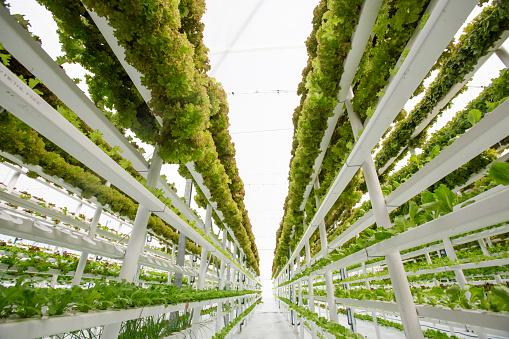
On the off chance that you’re a farming or planting fan, there are several things about Vertical farming you ought to be aware of. While there are numerous ways of characterizing this original method of farming, in the easiest terms, Vertical Farming is a training where food is delivered in genuinely slanted regions. In contrast to customary farming where harvests are planted at a solitary level, this extraordinary technique helps produce food in vertical and totally stacked layers that are likewise very much coordinated to numerous designs like steel trailers or high rises. Utilizing the Controlled Environment Agriculture Technology, this advanced farming strategy makes the most out of indoor farming techniques. This technique includes misleadingly controlling the temperature, directing the light, and controlling the gases, which can all be done inside. That is likewise the motivation behind why numerous ranchers track down Vertical Farming to bear various similitudes with nursery farming. The primary objective of this farming technique is to expand the result of harvests in a little or squeezed space.

Benefits of Vertical Farming

As we previously referenced, vertical farming accompanies a decent amount of masters. In this segment, we will talk about it exhaustively.

1. Guarantees Consistent Crop Production

One of the greatest advantages of vertical furnishing lies in the way that it is very dependable. That implies, when you choose vertical farming, you can be guaranteed of getting steady yield creation over time. This is additionally made conceivable in light of the fact that upward farming doesn’t for the most part depend on the climate, permitting you to develop crops without becoming stirred up about unfriendly atmospheric conditions. At the point when you ranch in a totally secured and profoundly checked zone, you likewise get the confirmation of getting rehashed crop creation with next to no prevention. Since the effect of nature is wiped out here, the possibility of the occasional yield does not exist anymore, and cultivators won’t experience misfortunes when they take a stab at pushing the creation window for occasional trimming. Ranchers can likewise fundamentally eliminate the complete reap time while additionally supporting the collect volume without thinking twice about either the flavour or the quality, the two of which keep on being totally predictable. For sure, both the flavour profile and the general timeframe of realistic usability has been completely well, when ranchers have utilized the right rules while rehearsing vertical farming. This is additionally particularly valuable for the business producers as they can now certainly focus on various conveyance timetables and take the arrangements mentioned by clients.

2. Utilizes Space Optimally

Assuming you knew about farming, you most likely realize that regular farming requires a few sections of land of totally rich land. In any case, vertical farming has no such pre-imperative circumstances. You can plan and assemble these ranches in essentially a wide range of areas and environment, nevertheless be guaranteed of developing yields paying little mind to temperature furthest points or unfavourable weather patterns. One more amazing nature of vertical farming is its stacking development framework. Because of this framework, you can accomplish greater efficiency in a tiny fix of land. Contingent upon the sort of harvest that you intend to develop, around one section of land of an upward homestead can reliably develop the yields that you likely would have filled in 10 to 20 sections of land of land.

Check Out: Vertical Farming Companies in UAE

3. Decreases Usage of Water

One of the greatest advantages of vertical farming lies in the way that it follows a Hydroponic developing cycle by which just 10% of the water is utilized. This method of farming additionally utilizes less manures and supplements when contrasted with ordinary strategies. Since the water is totally spotless even after the utilization, it very well may be appropriately reused accordingly lessening the all out cost and eliminating waste.

4. Reduces Down on Transport Expense

While we’re discussing food creation, last-mile conveyance is many times considered the most costly part of the whole inventory network. Assuming you’re some way or another acquainted with the farming system, you would likewise realize that harvests should be delivered across numerous seas, nations, and even landmasses.  In any case, vertical farming represents no such issue. This is one of those intriguing methods of farming that permits you to develop crops basically anyplace. Thus, you can continuously decide to develop crops in a space where your client resides consequently lessening transportation costs, carbon-di-oxide emanations, and the steady requirement for refrigerating your produce. By the day’s end, this doesn’t simply add to the newness of your items yet in addition makes it unimaginably beneficial.

Check Out: Vertical Farming in Dubai

5. Less Labor Costs

In the event that you are wanting to rehearse vertical farming in a totally computerized indoor developing framework, you wouldn’t require gigantic lumps of work for getting steady, yearly creation. This cycle just requires people/workers with low abilities. Since they should simply oversee and pack the harvests, the general work above costs will more often than not be extremely low. Along these lines, you can appreciate more produce with less expensive work and even scale up your creation without stressing over the extra expenses.

6. Energy Efficient

Vertical farming is likewise a profoundly energy-effective cycle. Albeit this method of farming utilizes LED lighting, certain upward ranches likewise have the limit of producing their own power. For example, you will find different associations represent considerable authority in sustainable advances that join intensity and power for making an effective arrangement that can bridle the additional energy which can later be utilized in different region of your business. You can likewise move the abundance energy to your separate influence network and set aside some additional cash.

Check Out: Vertical Turmeric Farming in UAE

7. Doesn’t Involve Chemicals or Pesticides

At the point when you develop food in an upward ranch, you get the opportunity of totally eliminating the need to put resources into pesticides. That is on the grounds that your farming is polished in a controlled climate that denies the section of nuisances. This forestalls crop harm and diminishes the opportunity of a scope of parasitic sicknesses as the stickiness levels are presently properly made due. By the day’s end, you are left with an item which isn’t simply better, yet additionally better and more secure to consume.

8. Limits Occupational Hazards

This is one more fantastic advantage with regards to vertical farming. Not at all like conventional farming, Vertical farming is both human agreeable and supportable. Why? All things considered, on the grounds that it can effectively limit the word related risks that you would somehow or another observer on account of customary farming. With Indoor farming set up, no rancher is presented to the risks related with utilizing weighty farming gear. Moreover, they are additionally very much shielded from a scope of sicknesses like jungle fever, issues from unsafe synthetic compounds, and any semblance of it. Since this method of farming doesn’t influence trees and creatures around inland zones, it is additionally a fantastic method for advancing biodiversity.

Check Out: Vertical Turmeric Farming in Dubai

9. The Future of Farming

Many have named Vertical Farming to be the farming representing things to come, and as it should be! This is considerably more obvious in light of the fact that a colossal piece of the human populace is probably going to move to metropolitan regions by 2050. In a circumstance like this, the populace also is probably going to develop, and a development in populace will help the interest for legitimate, very much developed, natural food. Since Vertical Farming effectively utilizes land and water it should assist with getting ready cultivars for this looming challenge. Vertical farming is a supportable technique for farming and by creating reliable rounds of the yield without settling on the quality, it is unquestionably the future we have been anticipating.

10. Bigger Produce

Likely the greatest advantage of vertical farming is the way that it helps produce more harvests overall. As we definitely know, this method of farming empowers cultivars to create crops reliably in a little region. Curiously, it likewise supports how much produce.
3 Important  Guide to Vertical Farming Techniques

Our predecessors were quick to figure out how to cultivate something like 12,000 years previously. Through developing and training seeds, the trackers and finders passed on their roaming lives and settled down to make completely safe staples (assuming it doesn’t rain normally) and, little did they understand, would steer our reality’s future for more details about vertical farming in details visit Vertical Farming Companies In UAE.

In the twentieth 100 years and a little gathering of engineers started wanting to change the food business in their own novel manner. They looked to diminish the reliance on customary farmlands and augment the proficiency of spatial space in our metropolitan climate. envision less open space with work vehicle tracks and more designs that develop piles of harvests. This technique for cultivating frequently alluded to as “indoor” or “vertical cultivating” (taken from Gilbert Ellis Bailey’s 1915 novel that bore the indistinguishable name)- – is still being used and developing and is particularly common in regions like the New York metro region.

Columbia University teacher emeritus and environmentalist Expert assisted with imagining the eventual fate of vertical ranches and indoor cultivation while at the same time showing an alumni level course in the year 1999. His understudies understood that establishing gardens on housetops would be insufficient to support the developing populace of Manhattan along these lines, in keeping with the trailblazers of metropolitan farming, he began exploring different strategies and designs. Expert is one of the specialists and specialists who view vertical cultivating today as a part of the answer to a heap of worldwide difficulties (numerous because of horticulture) like water shortage and environmental change.

There are various ways of developing vertical farming here are 3 methods that Expert suggests for soilless development. In the event that appropriately done at various aspects, they’re similarly viable as developing harvests in tall structures as they are in 500 square feet studio lofts says the Vertical Farming in Dubai experts.:

Vertical Farming in Dubai

Tank-farming

One of the most persevering and famous methods for vertical cultivating, aqua-farming includes developing plants without soil, and in a dissolvable, that is advanced with minerals and supplements. The clearest strategy for aqua-farming (called the “drifting pontoon” technique) is to suspend the plants in a uni soil pontoon, like the polystyrene sheet, and let the roots hang to retain oxygen-circulated air through arrangements. Another well-known technique is the supplement film strategy which is utilized to develop lettuce. The flood of the arrangement containing the supplement is siphoned through a calculated channel, typically an aluminum pipe, which is then loaded up with the plants. The arrangement courses through the plant’s foundation mats and is then gotten back to the plant for proceeded use. 

Also, check out the Vertical Turmeric Farming in Dubai the best turmeric farming from a modern technique.  

Aeroponics

It’s not shocking that NASA has upheld examination into aeroponics for the beyond twenty years since its free-drifting roots tasteful is regularly used in modern science fiction films. Aeroponics lets the hanging digs absorb a fine fog that is an atomized type of sustenance arrangement that is showered straightforwardly onto the roots utilizing the siphon. While aeroponics permits plants to become fundamentally quicker than aqua-farming, it requires greater gear and, therefore, is all the more expensive. Many developed countries are using vertical farming techniques for details about it visit Vertical Turmeric Farming in UAE.

Hydroponics

Like aquaponic frameworks that are aquaponic, they involve an un-soil-based plant bed that is suspended over body water that contains the supplements expected to develop plants. Inside the water, the body is an overflow of marine fish (normally herbivores) who produce squander that fills in as compost for plants. The plants help in the sanitization of the water, making the water reasonable for fish.

To guarantee that an equilibrium can be kept up with to guarantee the equilibrium of the two structures, hydroponics requires more consideration than aeroponics and aquaculture despite the fact that filtration and air circulation gear can assist with these issues. Moreover, the sorts of plants you can develop are more restricted since the plant supplements expected by plants should be viable with the supplements expected for fish.

What Important Things You Should Know About Vertical Farming

Is It the Future of Agriculture?

By 2050, the total populace is relied upon to develop to 9.7 billion individuals, and taking care of it will be a tremendous challenge.1 Due to the modern turn of events and urbanization, we are losing arable terrains consistently. In 2015, researchers revealed that the Earth had lost 33% of its arable grounds over the past 40 years.2

We don’t have the foggiest idea of the amount more we will lose in the following 40 years. Expanding food interest because of a developing populace alongside truly diminishing arable grounds presents perhaps the best test confronting us. Many accept that upward cultivating can be the response to this test. Is upward cultivating the eventual fate of horticulture? How about discovering more about Vertical Farming Companies In UAE.    

What Is Vertical Farming?

Vertical cultivating is the act of creating food in an upward direction on slanted surfaces. Rather than cultivating vegetables and different food sources on a solitary level, for example, in a field or a nursery, this technique produces food sources in upward stacked layers ordinarily coordinated into different constructions like a high rise, steel trailer, or repurposed stockroom.

Utilizing Controlled Environment Agriculture (CEA) innovation, this cutting-edge thought utilizes indoor cultivating procedures. The counterfeit control of temperature, light, moistness, and gases makes delivering food varieties and medication indoors conceivable. In numerous ways, vertical cultivating is like nurseries where metal reflectors and counterfeit lighting expand normal daylight. The essential objective of vertical cultivating is boosting crops yield in a restricted space.

Know More about Vertical Farming in Dubai  by visiting this Link

How Vertical Farming Works

There are four basic regions in seeing how vertical cultivating functions: 1. The actual design, 2. Lighting, 3. Developing medium, and 4. Supportability highlights.

Initially, the essential objective of vertical cultivating is delivering more food varieties per square meter. To achieve this objective, crops are developed in stacked layers in a pinnacle life structure. Besides, an ideal mix of regular and counterfeit lights is utilized to keep up with the ideal light level in the room. Advancements, for example, pivoting beds are utilized to further develop lighting effectiveness.

Thirdly, rather than soil, aeroponic, aquaponic, or aquaculture developing mediums are utilized. Peat greenery or coconut husks and comparative non-soil mediums are exceptionally normal in vertical cultivating. At long last, the upward cultivating technique utilizes different maintainability highlights to counterbalance the energy cost of cultivating. Indeed, vertical cultivating utilizes 95% less water.3

Benefits and Disadvantages of Vertical Farming

Vertical cultivating has a great deal of guarantee and seems like the homestead of things to come. Nonetheless, there are a couple of hindrances to consider prior to surging without holding anything back into vertical cultivating.

Benefits

  • It offers an arrangement to deal with future food requests
  • It permits yields to develop all year
  • It utilizes altogether less water
  • Climate doesn’t influence the yields
  • More natural yields can be developed
  • There is less openness to synthetics and illness

Weaknesses

  • It very well may be exorbitant to assemble and financial plausibility studies haven’t yet been finished
  • Fertilization would be truly challenging and exorbitant
  • It would include higher work costs
  • It depends a lot on innovation and one day of force misfortune would be pulverizing

Benefits of Vertical Farming

Having more noteworthy results from a little development region isn’t the main benefit of vertical cultivating. Following are a portion of the significant advantages of vertical cultivating:

The groundwork for the Future: By 2050, around 68% of the total populace is relied upon to live in metropolitan regions, and the developing populace will prompt an expanded interest in food.4 The proficient utilization of vertical cultivating may maybe assume a critical part in planning for such a test.

Expanded And Year-Round Crop Production:

 Vertical cultivating permits us to deliver additional yields from a similar area of the developing region. Truth be told, 1 section of land of an indoor region offers comparable creation to something like 4-6 sections of land of outside capacity.5 According to a free gauge, a 30-story working with a basal space of 5 sections of land might conceivably deliver a likeness 2,400 sections of land of ordinary even farming.6 Additionally, all-year crop creation is conceivable in a controlled indoor climate that is totally constrained by vertical cultivating advancements.

Less Use Of Water In Cultivation:

 Vertical cultivating permits us to deliver crops with 70% to 95% less water than needed for ordinary cultivation.7

Not Affected By Unfavorable Weather Conditions:

 Crops in a field can be antagonistically impacted by normal catastrophes like heavy rains, twisters, flooding, or serious dry seasons—occasions that are turning out to be progressively normal because of an Earth-wide temperature boost. Indoor vertical ranches are less inclined to feel the brunt of the ominous climate, giving a more prominent conviction of reap yield consistently.

Expanded Production of Organic Crops: 

As harvests are delivered in a very much controlled indoor climate without the utilization of substance pesticides, vertical cultivating permits us to develop sans pesticide and natural yields.

Human and Environmentally Friendly: Indoor vertical cultivating can altogether reduce the word-related perils related to conventional cultivating. Ranchers are not presented to risks identified with weighty cultivating hardware, illnesses like jungle fever, noxious synthetic substances, etc. As it doesn’t upset creatures and trees in inland regions, it is useful for biodiversity also.

Looking to more about Turmeric farming visit Vertical Turmeric Farming in Dubai.       

Restrictions of Vertical Farming

Vertical cultivating has two advantages and disadvantages. Once in a while, the geniuses of vertical cultivating are featured and not the cons. Following are the significant restrictions of vertical cultivating:

No Established Economics: 

The monetary practicality of this new cultivating strategy stays unsure. The monetary circumstance is evolving, be that as it may, as the business develops and innovations improve. For instance, New Jersey-based indoor-cultivating startup Bowery declared in December 2018 that it had brought $90 million up in crisp subsidizing. In 2017, Plenty, a West Coast vertical producer, declared a $200 million speculation from Softbank.

Challenges with Pollination: 

Vertical cultivating happens in a controlled climate without the presence of bugs. Thusly, the fertilization cycle should be done physically, which will be work escalated and exorbitant.

Work Costs: As high as energy costs are in vertical cultivating, work expenses can be considerably higher because of their fixation in metropolitan communities where wages are higher, just as the requirement for more gifted work. Mechanization in vertical homesteads, be that as it may, may prompt the requirement for fewer laborers. Manual fertilization might become one of the more work serious capacities in vertical homesteads.

A lot of Dependency on Technology: 

The improvement of better advances can generally expand productivity and decrease costs. However, the whole upward cultivating is amazingly subject to different innovations for lighting, keeping up with temperature, and moistness. Losing power for simply a solitary day can demonstrate expensive for an upward ranch. Many accept the advances being used today are not prepared for mass reception.

Vertical Farming in the United States

The upward cultivating area is filling quickly in the U.S., at a CAGR of over 24% between 2018-2024, when it is relied upon to reach $3 billion annually.8 By examination, the all-out U.S. products of the soil business was worth more than $104.7 billion in 2016.9 According to one record, “Customers would now be able to observe produce developed inside by in excess of 23 enormous vertical homesteads in excess of 20 general store chains in virtually every significant metropolitan region in the country.”

The business remains exceptionally utilized, notwithstanding, starting worries for its suitability, when endurance relies upon development, and extension is so capital concentrated. As indicated by a similar source, “While industry pioneers say scaling offers the best expect productivity around here, numerous upward homesteads have experienced issues when they started intending to add extra creation offices.”

End

Vertical cultivating advances are still generally new. Organizations are yet to effectively create crops at scale and make it financially plausible to satisfy the developing food need. The exhibition of homesteads like AS Agri Aqua will decide how significant a job vertical cultivating will play in the future to confront the test of developing food interest.

It is actually significant, nonetheless, that innovations created for vertical homesteads are additionally being taken on by different fragments of the indoor cultivating area, for example, nurseries, which can use regular daylight, but require substantially more land and longer courses to showcase.
If Need more Detailed information about Verticle Framing you can contact As Agri Aqua the Leading Verticle framing and Aquafarming Company in UAE, US, and India for more details Visit Vertical Turmeric Farming in UAE 

10 things you wanted to know before you purchase cultivated fish

1. Fish ranches are contaminating the oceans

Many seaward fish ranches let defecation and food squander fall straightforwardly into the sea beneath. The development of this waste can obliterate marine biological systems on the ocean bottom beneath, before in the end streaming into the sea.

2. Fish in ranches are gobbling up wild fish

Fish and salmon are carnivores. Also, actually like other cultivated creatures, they eat more than they produce. Consistently, a great many anchovies, sardines and other little fish are gotten from the sea to be taken care of to fish in fish ranches. Australia’s biggest salmon rancher, Tassal, utilizes 2 kg of wild got fish in feed to create only 1 kg of cultivated salmon.

3. Fish tissue coloured pink

Some fish ranches are attempting to lessen the quantity of wild got fish they use by subbing vegetables, chicken and other land animals into fish feed. This adjustment of salmon’s regular eating routine makes the tissue of salmon turn an unappealing dim shading. So, salmon ranchers incorporate an engineered compound called astaxanthin in fish feed which colours fish tissue the pink shading salmon eaters anticipate.

Looking for organic fish farming? Visit Organic Fish Farming in India.

4. Seals shot with beanbag projectiles

Normally, seals are attracted to fish ranches as a food source. With an end goal to discourage them, some fish ranches shoot beanbag projectiles at seals who approach the homesteads. Records have uncovered that in excess of 8,700 shots have been discharged at seals around hydroponics destinations in Tasmania beginning around 2013. The ABC detailed that there have been frequencies of seals being dazed and stunned because of being hit by one of these beanbag shots.

http://www.asagriaqua.com

5. Many fish experience the ill effects of infection

The confined conditions in fish ranches consider infection to spread quickly from one fish to another. Amoebic gill sickness is a parasite which flourishes in warm water, conveying it a typical intimidation to fish in Australian homesteads, especially during summer.[1] The parasite break down their gills, making it hard for fish to get sufficient oxygen, in the end causing heart breakdown and demise whenever left untreated.

There are a scope of other infections, microscopic organisms and parasites which can influence fish in ranches, regularly with unfortunate results.[2] In 2018, more than 1 million fish passed on from pilchard orthomyxovirus (POMV) in fish ranches in Tasmania.

6. “Washing” fish is distressing and hazardous

Amoebic gill sickness can be washed off fish in a cycle called ‘washing’ which includes siphoning fish through a cylinder into a freshwater tank, and afterward returning them to their ocean pen. In late spring months, fish might be ‘washed’ as regularly as each 30-40 days.

Cycles like this are extremely unpleasant for fish and can bring about wounds and mortalities, and in certain occurrences mass passing’s. In 2016, in excess of 175,000 salmon were killed ‘unintentionally’ during treatment for ocean lice in ranches in Scotland. In 2018, a Tassal ranch in Tasmania killed 30,000 fish during a ‘washing’ treatment, referring to ‘human mistake’ as the reason.

7. Contaminating wild fish populaces

As many fish are cultivated in ocean confines in the untamed sea, the pervasiveness of illnesses in fish ranches is a genuine danger to sea environments as sickness can spread into encompassing waters and contaminate wild fish populations.

If you want to know more about fish farming technology? Visit Fish Farming Technology in India

8. Mass passing’s

On top of the danger of death from infection, salmon are touchy to ecological changes, for example, temperature spikes and dunks in oxygen levels. The development of waste on the ocean bottom under fish ranches can contrarily affect oxygen levels, as can the stocking thickness of fish, water stream, water temperature and a scope of different variables. At the point when oxygen levels drop, fish become focused and battle to relax. In 2015, 85,000 salmon choked to death in a salmon ranch in Tasmania because of an adjustment of oxygen levels.

Atlantic salmon favour cool waters and in the wild, they can relocate tremendous distances to find temperatures where they can flourish. In ranches, their development is limited to pens, and when the temperature rises, they have no way out. In a New Zealand salmon ranch, countless fish kicked the bucket when water temperatures rose to 18 degrees in 2015. The representative for the ranch would not uncover the quantity of mortalities.

9. Fish enduring gloom

Upwards of 1 of every 4 fish in fish ranches give indications of extreme misery and essentially “abandon life”. These fish have hindered development and can be seen coasting dormant at the surface. The exploration inferred that discouraged fish display practices and cerebrum science practically indistinguishable from those of exceptionally focused and discouraged individuals.

Fish are savvier than many individuals give them acknowledgment for. Living in jam-packed tanks where they need to rival others for food and swim dully around and around is an upsetting and unnatural climate for a fish. Actually, like pigs and chickens in manufacturing plant ranches, fish in ranches carry on with an existence of torment.

Want to know more about fish farming? Do visit Fish Farming Companies in India.

10. Escapees from fish ranches could be a danger to nearby biological systems

Fish escape from ocean pens both in a regular ‘stream’ which is around 2-3% of fish stock (adding up to tons of fish each year), and through significant departures because of tempests, net tears and different causes. The fish cultivating industry is needed to report significant breaks of in excess of 1000 people. In 2000-2006, a sum of 208,000 salmon were accounted for to have gotten away in Tasmania in 11 departure episodes.[4] With the business developing, so are these numbers. In 2018 one frequency released 120,000 salmon into Tasmanian waters, and 2020 saw one more flare-up happen, with the departure of 50,000 Tasmanian cultivated salmon — giving further ascent to fears among naturalists that the break might actually “dirty” the marine climate and truly sway neighbourhood biological systems.

There is little examination done into the effects and destiny of cultivated salmon being delivered into Australian waters however some exploration proposes that, as carnivores, they could obliterate wild fish populaces. Others propose that they can’t make due in the wild and gradually starve to death.

If you want to know How to Start Fish Farming Visit Us Now!!

http://www.asagriaqua.com

The Benefits of Fish Farming

Fish cultivating, otherwise called hydroponics is quite possibly the most well-known spaces of cultivating in Nigeria and furthermore perhaps the most helpful. We are far past the times of getting fish in lakes or streams and selling at the nearby market as fish cultivating in Nigeria has progressed after some time and ranchers currently develop the fishes in their homesteads or houses. This way they can handle yield and income.

New and existing ranchers expecting to begin or grow their ability are urged to begin fish cultivating, as it has demonstrated to be extremely useful as far as deals and in general benefit.

This concise piece features ten astounding advantages of fish cultivating that will bring your advantage up in the endeavour.

1. Stable organic market

As one of the greatest wellsprings of protein, fish is generally devoured by Nigerians on a to some degree huge scope. This implies that interest for this item is basically steady throughout the entire year and since fishes develop quickly, there will consistently be sufficient to supply. Putting resources into fish cultivating will bring about huge and stable stream of benefits over the long haul.

Looking for organic fish farming? Visit Organic Fish Farming in India.

2. Top buyer decision

Fish is moderately less expensive than most meat items and consequently, it sells quicker. It is consequently an alluring endeavour as it stays the top decision for customers as far as moderateness.

3. Consistent Growth design

Development design in fish is exceptionally quick and straightforward. Ranchers can likewise animate the development interaction of the fishes by giving them certain development improving feeds. This quality of fish guarantees that ranchers can gather and sell in an exceptionally brief timeframe.

4. High Revenue

With appropriate arranging and great administration, fish cultivating can be entirely productive to ranchers. With N2 million as capital or venture, one could acquire up to N3 million worth of benefit in only a half year.

Want to know more about fish farming? Do visit Fish Farming Companies in India.

5. No Environmental Hazard

Fish cultivating adventures can be set up anyplace, including neighbourhoods, as it doesn’t make any natural or wellbeing risks.

6. Simple Addition to General homestead exercises

Ranchers can without much of a stretch fuse fish cultivating with their all-around existing yield homesteads and acquire benefit while preserving water and different assets.

7. Any types of fish can be Reared

Selective fish cultivating empowers ranchers to develop any types of fish they need to.

If you want to know more about fish farming technology? Visit Fish Farming Technology in India

8. Straightforward entry

The fish lakes can be set up inside the rancher’s compound to build openness and lessen expenses of transportation.

9. Incredible Source of Omega 3

Fish actually stays the greatest wellspring of omega 3 unsaturated fats which is exceptionally helpful to the human heart and mind. Omega 3 isn’t created in the human body and it must be gotten from an outside source. Fish is an incredible and sound wellspring of this supplement.

10. Simple to keep up with

With sufficient information, skill and assets, fishes can be extremely simple to deal with and keep up with.

Indeed, fish cultivating is perhaps the most rewarding agrarian undertakings. With a splendid marketable strategy and the truly necessary assets and skill, one can undoubtedly get incredible accomplishment through fish cultivating. If you want to know How to Start Fish Farming Visit Us Now!!

Benefits of Fish Farming Business

Fish cultivating is fundamentally bringing fish industrially up in the tanks and lakes to deliver food. Business fish cultivating has effectively settled as a rewarding undertaking everywhere. As we realize that fish is an extraordinary wellspring of food and protein, subsequently the interest and cost of fish and fish related items are likewise expanding quickly, as per populace development.

In spite of the fact that you can do fish cultivating business in any nation yet nations with waterfront regions are more reasonable for this business. Fish cultivating business is the lone method of acquiring for some individuals on the planet including India.

If you want to know more about fish farming technology? Visit Fish Farming Technology in India

Advantages of fish cultivating

There are numerous benefits of beginning business fish cultivating business and beneath given are a portion of the fundamental advantages.

1. According to the interest, business fish cultivating business considers huge supplies of fish. Getting fish from the wild can’t generally satisfy the interest of purchasers consequently in such cases business fish cultivating can fulfil up this need.

2. You can without much of a stretch raise the fishes in tanks until they are prepared for selling or advertising and they needn’t bother with the wide catch of wild fish. In this manner business fish cultivating helps in saving normal environments.

Looking for organic fish farming? Visit Organic Fish Farming in India.

3. Whenever contrasted with the wild fishes, a portion of the homestead raised fish species are more solid and heavenly. Fishes are by and large taking care of a wide assortment of supplement and protein enhanced food varieties or pellets on business fish ranches. So, ranch fish become more grounded than the wild fish.

4. There are surely different sorts of fish species from one side of the planet to the other. So, you can choose your ideal species for your fish cultivating business.

Want to know more about fish farming? Do visit Fish Farming Companies in India.

5. We additionally realize that fish is exceptionally well known as food from one side of the planet to the other in this manner there is now a set up fish market accessible for you. Furthermore, you don’t actually need to stress over where to sell them.

6. You can begin your fish cultivating business in enormous or limited scope creation; everything relies on the assets accessible with you.

7. What’s more, in the event that you don’t have adequate assets or cash to begin this business, you can likewise apply for bank credits.

8. You can likewise satisfy your day-by-day family healthful requests through limited scope fish cultivating in tanks or lakes.

Last however not the least fish cultivating business is an extraordinary wellspring of work. Notice that more than 1 billion individuals all around the world rely upon fishes as their essential protein source. What’s more, the greater part of them is straightforwardly or in a roundabout way engaged with fish cultivating or fish items business. Fish cultivating additionally creates a decent pay and work hotspot for these individuals. Additionally, worldwide fish exportation business at present is bringing in more cash each year, than some other food product.

If you want to know How to Start Fish Farming Visit Us Now!!

7 Things Everyone Should Know About Farmed Fish

If you eat seafood, chances are it is from a fish farm. Fish farming is a popular way to supply the growing world demand. Farmed fish accounts for about half of all fish consumed in the United States. Is fish farming the solution to the Earth’s food problems? Are marine farms able to satisfy the seafood needs of three billion people all over the world?

Here are some details about aquaculture and the long-term impacts it has on people, fish, and other animals. Although some fish farms may use sustainable practices, this is not always true. This industry is often referred to as a leader in food production. You should be aware of these seven concerns about farmed fish.

1. Wild fish might not be as nutritious as those caught in a farm.

This is a paradox that frustrates those who eat fish to improve their health. The nutritional benefits of fish can vary depending on how the fish is fed. For example, omega-3 fatty acid. Fish that are wild get their omega-3’s through marine lipids (or oils). However, fish raised for their omega-3’s are often fed corn or soy and other vegetable oils, which contain very little to no omega-3.

This feed can cause fish to consume higher amounts of saturated fats, and a lower ratio of omega-6 to Omega-3. This is not as desirable as the opposite.

Are you looking for fish farming in India? Visit Fish Farming Companies in India for more details about fish farming.

2. Wild species are also affected by farmed fishing.

Some farmed fish can survive on corn and soy diets, but others must eat lots of fish. For every pound of bodyweight, tuna and salmon need to consume five pounds of fish. This means that fish like anchovies, herring, and other prey are being fished to the point of extinction in order to feed world’s fish farms.

Oceana says that they have caught all the large fish and are now going after their food. The non-profit Oceana blames aquaculture’s voracious appetite for the decline in whales, dolphins and sea lions.

3. Fish can feel pain or stress.

The latest research has shown that fish can feel pain and stress, contrary to what many anglers believe. Fish raised for their meat are often subject to stress, such as hyper-confinement or exhausting harvesting methods. Because fish can experience pain and stress, improved welfare practices for farmed fish have been required.

Are you looking for organic fish farming? Visit Organic Fish Farming in India for more details about fish.

4. Diseases can be spread from fish raised in farms to wild populations.

Fish that are conventionally farmed are often packed as tightly in their pen or net as they are in their purses. These conditions can lead to parasites and diseases that often spread from the farm to wild fish populations. Sea lice infestations can cause mass killings of young salmon off Canada’s Pacific coast. This increases their chances of dying by 73%.

The damage doesn’t stop there. Eagles and bears, orcas and other predators all depend on salmon to survive. These species also suffer from a decline in wild salmon numbers.

5. Local ecosystems can also be affected by fish farms.

To control disease and parasite spread, antibiotics and other chemicals could be used on fish farms. One study showed that sea lice drugs kill a wide range of non-target marine insects and can travel up to half a kilometer before reaching the ocean. They also persist in the water for hours.

Looking for fish farming technology? Visit Fish Farming Technology in India

6. Farmed fish are trying to escape their unpleasant conditions, and who can blame them?

Each year, more than two million runaway salmon escape to the wild in the North Atlantic region. This means that approximately 20% of the supposedly wild salmon found in the North Atlantic region are farmed. However, this data was published in 1999. The wild population is affected by escapees who cross breed with wild fish to compromise the gene pool. For example, embryonic hybrid salmon are less viable than wild salmon.

If you want to know how much cost of fish farming? Just visit Fish Farming in India Project Cost they give you exact information about how fish farming works in India.

7. The Jevons Paradox is available.

Contrary to popular belief, this theory states that production methods become more efficient and the demand for resources increases. As aquaculture improves fish production efficiency, fish prices will rise.

This theory suggests that fish farms could actually increase fishing, which could be harmful to wild populations. The net result is that fish farming could increase the pressure on wild populations around the globe, which are already under severe threat.

What now?

It is a complicated story about the sustainability of fish farms. Fish farms are still a controversial topic due to higher rates of disease and chemical use waste. These examples of fish farming harms are supported by evidence but they do not apply to every fish farm. Some farmed fish can be more sustainably and healthier than their wild counterparts.

To know more visit Fish Farming Investment and Profit in India.

http://www.asagriaqua.com

8 Advantages of Vertical Farming

Vertical farming is the practice of producing food on surface that is vertically inclined. Unlike farming vegetables and other foods on one level, like during a greenhouse or field, this method produces foods in vertically stacked layers commonly integrated into other structures sort of a skyscraper, shipping container or repurposed warehouse. Using Controlled Environment Agriculture (CEA) technology, Vertical Farming in Dubai uses indoor farming techniques. The artificial control of temperature, light, humidity, and gases makes producing foods and medicine indoor possible.

Reliable year-round crop production

The biggest Vertical Farming in UK benefit is that the fact it’s not dependent on the weather – meaning you’ll achieve a uniform year-round crop production without fear about the impact of adverse climatic conditions can be on both quality and profiling of production and yield.

Farming in a protected, well-monitored, and managed environment brings peace and assurancee of mind for growers provides repeatable programmable production. By eliminating the consequences of Mother Nature, there’s no such thing as a ‘seasonal crop’ and growers won’t suffer from losses as they struggle to push the production windows of ‘seasonal cropping’. They can also successfully reduce harvest times as well as improve volume without compromising on flavour or quality, which tends to remains 100% consistent.

Unaffected by adverse climatic conditions

Growing during a fully enclosed and climate-controlled environment completely eradicates the necessity to believe – or worry about – the weather. Whereas crops during a field are often ruined by excessive rain, wind and drought ; Vertical Farming Companies in UAE provides 100% harvest certainty.

Better use of space

Traditional farms need fertile arable land. But vertical farms are often designed and inbuilt any climate or location – regardless of weather or temperature extremes. And since their stacking grow systems allow them to expand upwards, it’s also possible to realize higher productivity on a small land area. Counting on which crop is grown; one acre of vertical farm could consistently grow the like between 10 or 20 soil-based acres.

Environmentally friendly

Indoor farming are often good for the environment because it massively reduces the amount of fossil fuels needed for farming equipment which isn’t required to sow, fertilize, weed or harvest crops. Vertical farming also helps to enhance biodiversity because it doesn’t cause land surface disturbance, which helps the natural animal population which lives in and around farms to thrive.

Minimise water usage

One of the main Vertical Turmeric Farming in Dubai benefits is that the Hydroponic growing process only uses about 10% of the quantity of water, and as a result the nutrients and fertilisers, compared to traditional methods. Because the water is clean after usage, it can also allow it to be recycled and reused, by reducing costs and minimising waste.

No chemicals or pesticides

Growing food during a vertical farm, when managed correctly offers the chance to completely eliminate the need for pesticides – as pests cannot enter the controlled environment to cause crop damage and fungal diseases struggle to realize a foot hold as humidity levels are managed. the top result’s a product which is best , healthier, safer and featuring dry leaves which are clean and prepared to eat.

Reduce transport costs

When it involves food production, the last-mile delivery is usually the most expensive part of the supply chain. It’s not common for crops to be shipped across continents and oceans. Growing food closer to where the buyer lives is a massive Vertical Farming Investment UK benefit because it can massively reduce transportation costs, CO2 emissions and reduce the necessity for refrigerated storage

Low labour costs

Fully automated indoor growing systems don’t need huge amounts of manual labour to realize successful year-round production. People who have low-level skills are still required to sort and pack harvests, but labour overheads will remain low – even if production is scaled upwards.

The Growth Of Vertical Farming All Over The World

With more than 7,800 tall structures, the city of Hong Kong takes off over all others. More than 300 of its structures outperform 490 feet, with more individuals living more than 15 stories over the ground level than elsewhere on the planet. Having a horizon in the mists assists the thickly populated city with flourishing where space is limited. Horticulture has observed this development procedure, as vertical Farming Investment UK makes amazing yields. 

Vertical Farming is the interaction of food being created in vertically stacked layers, rather than on a solitary level, for example, in a field or nursery. The layers are generally incorporated into metropolitan constructions like high rises, steel trailers and repurposed distribution centers. 

Utilizing Controlled Environment Agriculture (CEA) innovation, the fake control of temperature, light, stickiness and gases makes it conceivable to create a huge swath of yields on a mechanical scale — with no open air openness. 

The Sky’s the Limit 

By 2050, around 80% of the total populace will live in metropolitan regions. With agrarian space in these zones scant or totally non-existent, how would we convey produce? 

It is assessed that one section of land of Vertical Farming In Dubai offers the same creation of at any rate four to six sections of land utilizing traditional open air techniques. As the plant’s development isn’t subject to daylight or influenced by meteorological conditions, creation can proceed at a similar rate throughout the entire year. As far as assets, the plants need however much 70% less water than customary homesteads. 

Natural harvests are a tremendous market, with request frequently overwhelming stock. As vertically cultivated harvests are delivered in an all around controlled region, there is undeniably less requirement for compound pesticides. It is additionally accepted that Vertical Turmeric Farming in Dubai could carry new create nearer to metropolitan populaces, decreasing the danger of supplements reducing during transport. 

No More Soil 

Tank-farming is a dominating developing technique by vertical Farming Companies In uae

the interaction includes developing plants in supplement arrangements that are basically liberated from soil, as roots are lowered into the arrangement and the plants are routinely checked to keep up the right degrees of compound piece. 

In case we’re actually to satisfy advanced plans of colonizing Mars, we will have to develop our own food. Anyway, where in the world has the conditions to try out this strategy? 

It may not have similar characteristics as the Red Planet, yet Antarctica’s constant winters make it difficult to develop produce outside, and products of the soil are sent significant distances from abroad only a couple times each year. 

In a bit nearer to extraterrestrial Farming, a semi-computerized tank-farming office develops plants without soil, utilizing mineral supplement arrangements in a water dissolvable. Researchers on Germany’s Neumayer Station III develop produce in a 20-foot-long steel trailer, developing greens in a region where such produce is normally restricted. This is only one illustration of how vertical Farming procedures can be utilized in territories influenced by brutal climate conditions. 

Detecting Growth 

To hit significant degrees of creation, development conditions in vertical homesteads should be ceaselessly upgraded. Sensors and information should be utilized to viably follow factors, for example, environment, supplement structure and light levels. 

Environment is described by a mix of air temperature, stickiness and carbon dioxide (CO2) levels. The impacts of these variables are huge. The distinction among plant and air temperature, for instance, can reveal to us whether the leaves’ stomata are open. In the event that they’re shut, the plant can’t ingest CO2 and convert it into biomass. We can likewise gauge the light level and range as seen by the plants and the pH of water system water for ideal development. 

Utilizing keen sensors that can screen these factors will guarantee that Vertical Farming In UK homesteads produce yields that incredibly surpass those of regular ranches, which are affected by wild conditions. 

With a horizon loaded with present day, shining developments, Hong Kong capitalizes on its space to convey flourishing. While vertical Farming still has far to go before it is economically reasonable, it is sure that food makers can gain from the methods it applies to help convey produce our rising populaces.

10 Major Benefits Of Polyhouse Farming

The world has been agronomically overwhelmed since for eternity. The subtropical climatic conditions are generally appropriate for agribusiness and have been for quite a while. Nonetheless, as of late the proficiency of produce or the turnout has been lower than the standard and tremendous misfortunes have been confronted. 

To decrease misfortunes and accomplish a higher produce in a similar sum or significantly lesser measure of speculation nursery cultivating has been on the ascent. The term nursery is essentially instituted for the gases that are answerable for an Earth-wide temperature boost. They trap the warmth and don’t permit it to get away. 

What is named terrible for the climate can be utilized for our advantages in a controlled encompassing. A polyhouse by vertical Farming Companies In uae  is a construction that is normally covered with glass, polyethylene or wood and the appropriate conditions are looked after inside. The temperature inside is higher than that of the outside because of the presence of ozone depleting substances. 

A polyhouse is a kind of nursery which is covered with polyethylene. This is the most usually utilized kind of nursery cultivating in India because of its modest development cost. This is the most practical when contrasted with glass or wood, nonetheless, is the most un-solid. Here is a finished manual for polyhouse development in India. 

Polyhouse Vertical Farming In UK  is very helpful for the farmers especially those who choose organic farming, so here are 10 of the benefits of a polyhouse:

There are different points of interest for a polyhouse of development of Vertical Turmeric Farming in Dubai over ordinary cultivating. That is the reason we are seeing an uprising in polyhouse development. There are over 1,000,000 distinctive polyhouse plants in India and there are more to come in the coming long time to satisfy the market need. The temperature of the climate can be controlled by the necessities and the yield acquired could be better. 

High dampness can likewise be changed in like manner. In an open field, the yields are more inclined to assaults by vermin and bugs which makes the ranchers shower bug sprays and pesticides that are unsafe for us. Polyhouse vertical Farming Investment UK development decreases or rather eliminates the need of any pesticides and synthetic compounds in this manner keeping the harvests better for utilization and not lessening its dietary benefits. Your plants are grown under controlled temperature therefore there is less likelihood of crop loss or damage.In an open field, attack by creatures and winged animals likewise bring about right around 33% of the harvest being lost and this can be maintained a strategic distance from in a polyhouse. 

The agrarian land in India has been diminishing and polyhouse cultivating is the most ideal approach to beat the circumstance. This is the reason there are different Vertical Farming In Dubai polyhouse cultivation instructional courses led in different pieces of the country in different organizations that will advance the development of polyhouse development.

We can get more produce and more yields by cultivating in a controlled way and the benefits and the nature of the produce is consistently higher for this situation.

You can grow crops during the year and will not have to wait for any particular season.There are less pests and insects in a polyhouse.Fertilizer application is easier and is controlled automatically with the help of drip irrigation.

Exterior climate will not have any impact on the growth of crops.

Quality of produce is obviously higher in polyhouse.

Good drainage and aeration Propagation of Ornamental Crops can also be done fluently in a Hydroponic Farming in India.

Poly House gives the right environmental amenities to your plants in any season.

It also increases yield for about 5 to 10 times with Less cropping period